

1.Introduction
The International Monetary Fund (IMF) projects the world economy will reach $124 trillion by 2026, yet this milestone is accompanied by deep divergence in growth across regions. Asia-Pacific has surpassed North America as the largest economic zone, with ASEAN standing out – a $4.3 trillion market characterized by a young population and rapid digitization, becoming a focal point for supply chain shifts and Foreign Direct Investment (FDI) inflows.
Vietnam, with a projected GDP growth of 6.1%, is leading Asia-Pacific and emerging as a resilient market with clear expansion prospects.
However, this “New Globalization” era presents critical challenges:
- Unpredictable geopolitical risks.
- Protracted trade disruptions.
- Rising cost of capital, insurance, and operations.
- Higher technological innovation requirements.
Against this backdrop, Vietnamese enterprises must proactively innovate and strategically position themselves to capitalize on the disproportionate growth opportunities within emerging markets.
2. Global Overview: The Irreversible Power Shift
2.1. Top 5 Economies Driving Global GDP
IMF projections for the top economies in 2026 reveal notable shifts:
The US retains the #1 spot with a $31.8 trillion GDP, equivalent to the combined GDP of China, Germany, and India, despite moderate growth due to trade tensions.
China ranks second at $20.7 trillion, experiencing its slowest growth in four decades (around 4%) due to an aging population and internal challenges, while pivoting toward technological self-reliance and domestic consumption.
Germany, the anchor of the European economy, holds third place at $5.3 trillion, facing productivity and fiscal policy hurdles.
India, with robust 6.8% growth, is projected to climb to fourth place, surpassing Japan with over $4.5 trillion, expected to overtake Germany by 2028, driven by demographic advantages and policy reforms.
Japan slips to fifth place at $4.5 trillion, grappling with weak growth due to an aging population and stagnant productivity, supported only by short-term fiscal stimulus.
Crucially, the Asia-Pacific region has officially EXCEEDED North America to become the world’s largest economy with a GDP of approximately $42 trillion (growing at 4.0%), compared to North America’s $34 trillion (1.8% growth), Europe’s $26 trillion (1.1% growth), and $22 trillion for other regions (3.5% growth).

2.2. ASEAN: A $4.3 Trillion Market and Vietnam’s Role
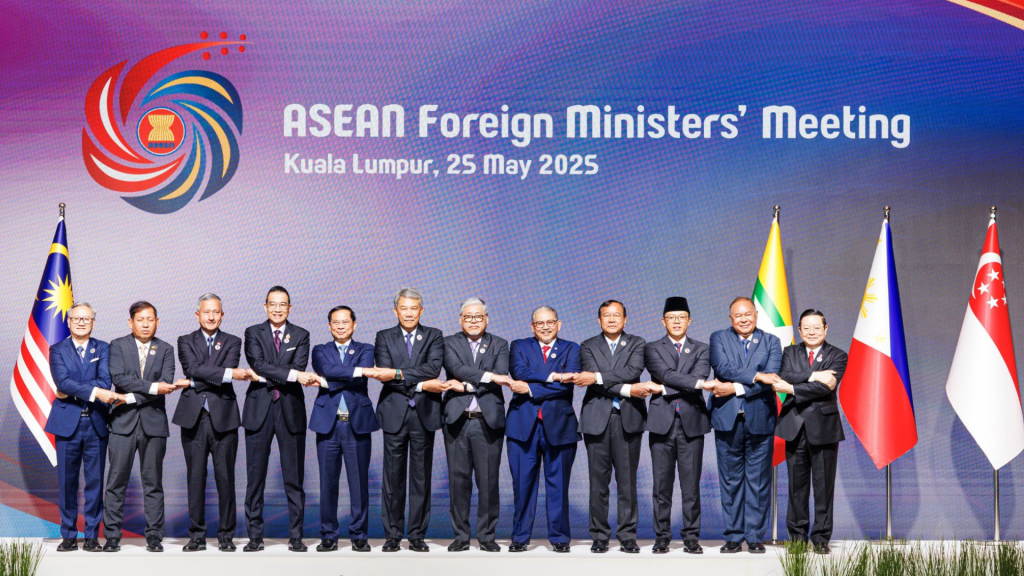
Southeast Asia (ASEAN) is emerging as a primary growth engine, highlighted by impressive figures:
- Total GDP: $4.3 trillion
- Population: 680 million
- Average Growth: 5.2%
- Middle Class: Rapidly expanding
- Internet Users: Over 400 million
- Trade Volume: $3.6 trillion/year
- FDI Inflows: Over $200 billion (2024)
Why ASEAN Matters:
- Strategic Location: Gateway to Asia-Pacific.
- Young Workforce: 50% of the population is under 30.
- Competitive Operating Costs.
- Digital Transformation: Fastest rate of technology adoption globally.
- Trade Hub: Logistics and supply chain convergence.
- FDI Magnet: Attracting a wave of manufacturing relocation from China (China+1 strategy).
Within this high-growth region, Vietnam is the brightest star:
- Projected GDP growth of 6.1% (World Bank), leading the Asia-Pacific region.
- Strong export diversification.
- Expanding high-tech manufacturing ecosystem.
- The government aims for 10% growth in 2026 and an upgrade to “Emerging Market” status for its stock exchange.
3. Three Strategic Imperatives for Vietnamese Businesses
As the global economy enters the $124 trillion phase with unprecedented divergence, Vietnamese businesses cannot rely on old growth models. Geopolitical risks, rising operating costs, supply chain disruptions, and fierce regional competition necessitate strategic positioning. Here are the Three Core Strategic Imperatives to maintain competitiveness, expand market reach, and increase value.
3.1. Diversify Market Exposure
Shift from “Market Dependency” to “Market Portfolio Strategy”
Global growth divergence means traditional markets no longer guarantee stability. Vietnamese businesses must shift from focusing on a few large markets to a market portfolio strategy to optimize returns, manage risk, and accelerate growth.
Strategic Implications:
- Reclassify the market portfolio into three tiers: Mature Markets, Growth Markets, and Frontier Markets.
- Leverage New-Generation Free Trade Agreements (FTAs) to shift from cost-based competition to standards and scale competition.
- Establish Market Intelligence capabilities for demand forecasting, competitor analysis, and prioritized segment selection.
- Optimize and diversify trade channels: cross-border e-commerce, B2B marketplaces, and partner networks.
Expected Impact:
- Mitigate risk concentration.
- Achieve sustainable revenue growth by diversifying customer base and demand sources.
- Enhance pricing power through access to wider customer segments.
3.2. Build Supply Chain Resilience
Shift from “Cost Optimization” to “Flexibility and Resilience Optimization”
The global supply chain has entered a phase of prolonged uncertainty. Businesses reliant on a single source, market, transport route, or manufacturing cluster face higher disruption risks. Vietnamese businesses must pivot from a lean supply chain model to a resilient supply chain, prioritizing operational continuity over cost alone.
Strategic Implications:
- Diversify sourcing through a dual/multi-sourcing model, reducing reliance on any single country or supplier.
- Implement AI, IoT, demand forecasting, and digital twins to predict demand and optimize real-time production capacity.
- Establish regional manufacturing and logistics hubs within ASEAN to shorten lead times and reduce transportation costs.
- Form strategic alliances with Tier 1–2 suppliers to elevate quality, standards, and scalability.
Expected Impact:
- Shorten recovery time during supply chain disruptions.
- Reduce financial losses from “black swan” events.
- Increase customer responsiveness, especially in high-speed industries (retail, FMCG, electronics, textiles, etc.).
3.3. Invest in Innovation and Technology Capabilities
Shift from “Operational Improvement” to “Business Model Reinvention”
In this era of divergent growth, competitive advantage no longer stems from manufacturing scale or cost optimization alone, but from the ability to innovate business models, create new value, and climb the value chain. The fastest-growing regional corporations share a common trait: heavy investment in technology, data, new products, and operational model innovation.
Strategic Implications:
- Implement Intelligent Automation (AI, RPA) in manufacturing and operations to boost productivity and reduce error rates.
- Develop products based on user needs, not just current capabilities (Outside-In approach).
- Deploy new business models: platform models, subscription services, and data-driven decision-making.
- Invest in internal R&D, and collaborate with technology startups, research institutions, and innovation centers.
Expected Impact:
- Increase profit margins through higher productivity and high-value-added products/services.
- Expand into premium customer segments, reducing pressure from price competition.
- Create an economic moat (sustainable competitive advantage) that is difficult for competitors to replicate in the short to medium term.

These three priorities are not merely reactions to global volatility; they form a New Strategic Architecture designed to enhance the competitiveness of Vietnamese businesses in high-growth markets, increase flexibility and resilience, and create new, sustainable value.
4. Conclusion
In summary, the global economy’s trajectory toward $124 trillion by 2026 is not just a size milestone but a confirmation of profound growth divergence, with the focus shifting strongly toward Asia-Pacific and dynamic emerging markets like Vietnam and ASEAN.
To capitalize on the 2.5x FASTER growth advantage in these emerging markets and navigate the persistent geopolitical risks, Vietnamese businesses cannot adhere to the old “playbook.”
Success will not come from reaction but from proactive leadership, foresight, and comprehensive strategic preparation today. Contact IBP for specialized consultation on market expansion and innovation strategies, helping your business seize breakout growth opportunities in the New Globalization context.
Contact Us!
References:
- International Monetary Fund (IMF). (2025). World Economic Outlook, October 2025. https://www.imf.org/en/Publications/WEO
- World Bank. (2025). Global Economic Prospects 2025. https://www.worldbank.org/en/publication/global-economic-prospects
- Voronoi App. (2025). Where’s the World Heading in 2026? https://www.voronoiapp.com/economy/Wheres-the-World-Heading-in-2026-6961
- Morgan Stanley Research. (2025). Global Economic Outlook 2026: U.S. Resilience to Lead Growth.
- Asian Development Bank (ADB). (2025). Asian Development Outlook 2025.
- ASEAN Secretariat. (2025). ASEAN Economic Community Dashboard. https://www.aseanstats.org/
- Vietnam General Statistics Office (GSO). (2025). Socio-Economic Report 2024-2025.
- McKinsey Global Institute. (2025). The Future of Asia Report.