Discover Innovation OS – A 6-Pillar Model Enabling Sustainable Innovation Capabilities with IBP
1. What is an Innovation OS (Operating System)?
An Innovation OS refers to a structured and systematic approach that an organization adopts to manage and drive innovation effectively.
It comprises a set of interconnected strategies, processes, tools, and practices designed to foster a culture of innovation and deliver sustainable results.
This Innovation OS helps an organization streamline its innovation efforts, align them with its strategic goals, and ensure that innovation becomes an integral part of its daily operations.
It provides a framework for managing innovation from idea generation to execution, enabling the organization to continuously adapt and thrive in a rapidly changing business environment.

2. Why Do Businesses Need an Innovation OS?
“It’s not about ideas. It’s about making ideas happen.” – Scott Belsky
Just as an enterprise operating system (ERP) helps manage finance, human resources, or supply chains, Innovation OS enables organizations to turn ideas into tangible business outcomes—rather than stopping at fragmented initiatives.
In reality, most organizations do not lack ideas. What they lack is a system that allows them to:
- Select the right ideas
- Allocate resources effectively
- Experiment quickly, yet in a controlled manner
- Measure impact and scale what works
Without an Innovation OS, innovation efforts often fall into familiar traps:
- Innovation driven by trends, individuals, or short-term leadership agendas
- Abundant ideas with little or no execution
- Pilot projects that fail prematurely due to lack of budget, governance, or decision-making authority
- Technology investments that generate no clear business value
Innovation OS is designed to address these bottlenecks by shifting innovation from an intuitive, ad-hoc activity into an operational, measurable discipline.
Here are a few reasons why an organization may need an Innovation Operating System (Innovation OS):
- Sustainable Growth: To achieve consistent and sustainable growth in an ever-evolving business landscape, organizations need to continually innovate to stay relevant and meet changing customer demands.
- Competitive Advantage: Innovation can provide a significant competitive edge by enabling a company to differentiate itself from rivals, respond swiftly to market changes, and outperform competitors.
- Cost Efficiency: Implementing innovative solutions can lead to cost savings, improved resource allocation, and enhanced operational efficiency, ultimately boosting the organization’s profitability.
- Market Expansion: When entering new markets or addressing emerging customer needs, innovation is crucial for tailoring products and services, ensuring successful expansion, and capturing new opportunities.
- Talent and Culture: An Innovation OS can attract and retain top talent who are drawn to innovative organizations. It also fosters a culture of creativity, experimentation, and adaptability, which is essential in today’s business environment.

3. IBP’s Innovation OS Model: 6 Essential Pillars
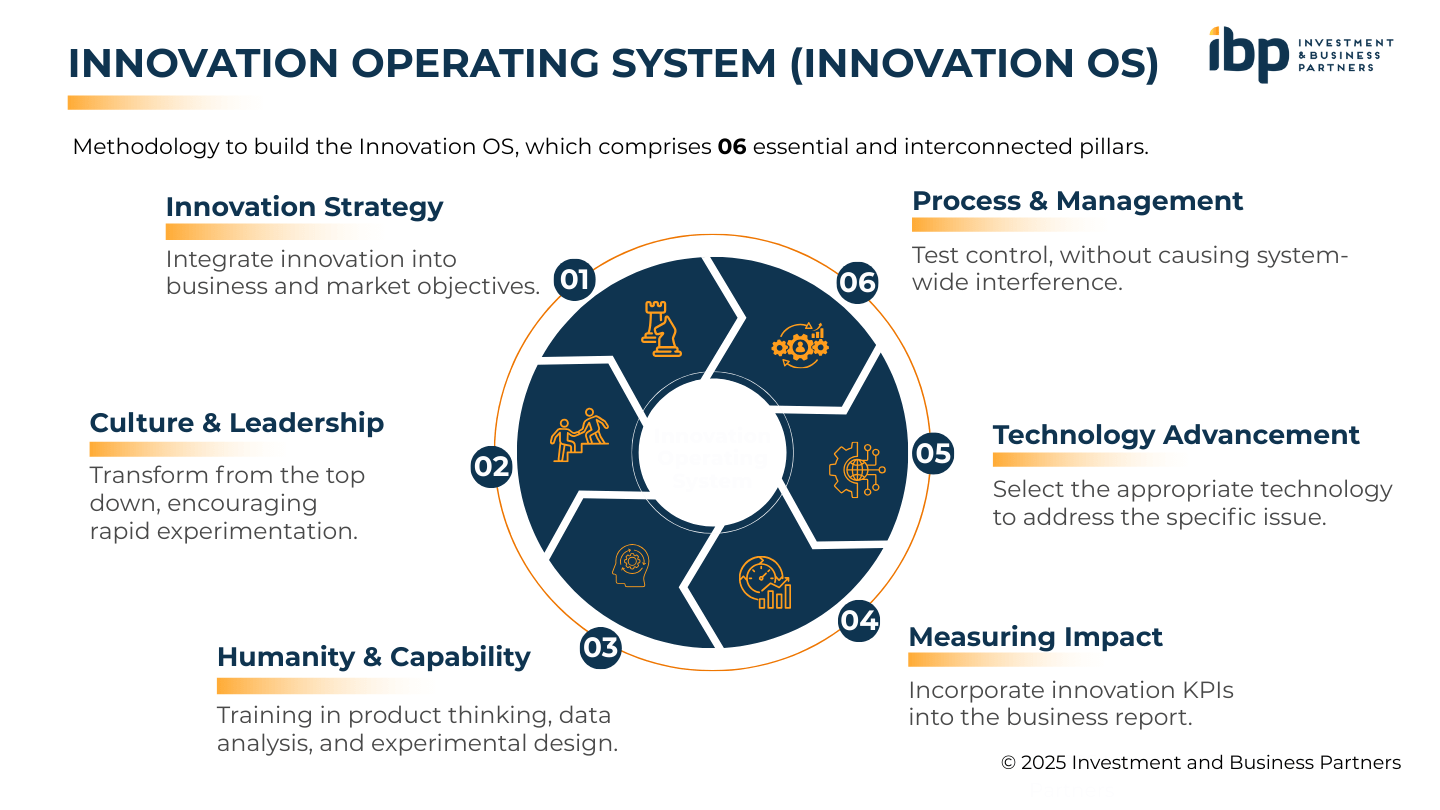
To build an effective innovation operating system, IBP proposes six tightly interconnected pillars:
1. Innovation Strategy: Innovation cannot be separated from business strategy. This pillar ensures that innovation efforts are directly integrated into core business and market objectives.
2. Culture & Leadership: Transformation must begin at the top. Leaders play a critical role in creating an environment that encourages rapid experimentation and embraces calculated risk-taking.
3. Humanity & Capability: Focuses on developing teams with strong product thinking, data analysis, and experimentation design skills—equipping them for the demands of the new era.
4. Process & Management: Establishes flexible governance mechanisms that allow experimentation to move quickly—without disrupting or destabilizing the organization’s core operations.
5. Technology Advancement: Technology is a powerful enabler. The key is selecting the right technologies to solve specific business problems, rather than blindly chasing trends.
6. Measuring Impact: What cannot be measured cannot be managed. Organizations must integrate innovation KPIs into formal business reporting to track real-world performance and outcomes.
Innovation is not a random “Eureka” moment—it is the result of a well-designed operating system. With IBP’s 6-pillar Innovation OS model, organizations gain a clear roadmap to confidently break through and lead their markets.
With more than 15 years of experience partnering with enterprises, organizations, and innovation ecosystems, IBP goes beyond providing solutions. We help businesses build the right methodologies, systems, and innovation capabilities tailored to their unique context.
👉 If your organization is facing challenges related to growth, transformation, or repositioning in the AI and technology-driven era, now is the time to begin by designing the right Innovation OS.
Connect with IBP to explore a tailored roadmap for building your organization’s Innovation Operating System – from strategy to execution, from leadership mindset to measurable business results.